
Graduate Programs
Explore the programs offered by this organization.
The Department of Structural Biology at the Stanford University School of Medicine is a preeminent center for the molecular and structural understanding of living systems. As a pioneering program in its field, the department sits at the vibrant interface of physics, chemistry, and biology. Research in the department spans a wide range of biological problems at the molecular, cellular, tissue, and organismal scales—deciphering the fundamental mechanisms of life through the three-dimensional architecture of biological macromolecules.
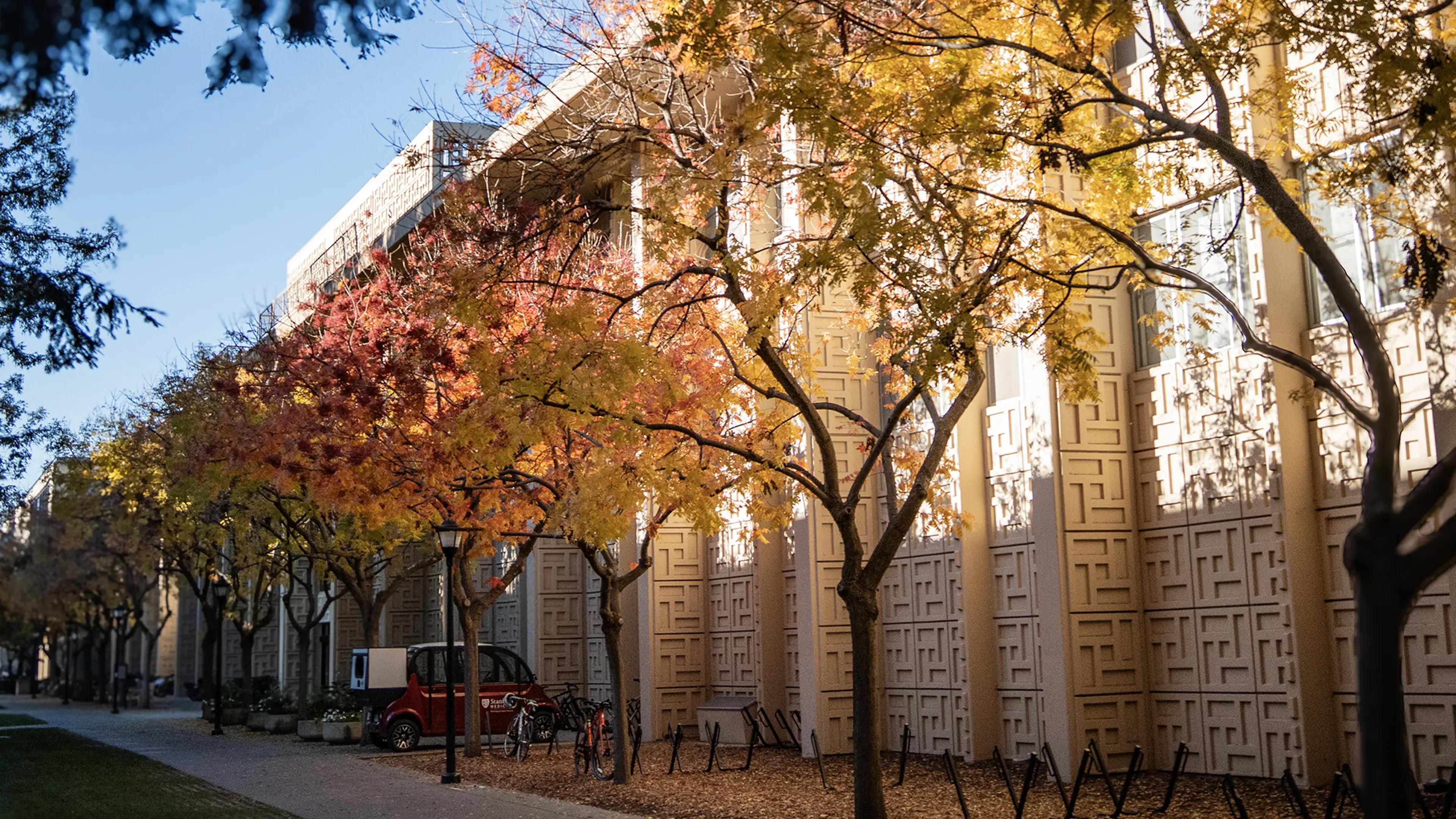
Housed in the Sherman Fairchild Science Building, the department has created a highly collaborative environment where biophysicists, biochemists, and cell biologists work side by side. By defining the atomic structures of complex molecular machines, our researchers aim to uncover the basic physical principles of cellular function and provide the molecular blueprints necessary to design targeted, next-generation therapeutics.
The Department of Structural Biology offers an exceptional, research-intensive training environment designed to prepare scholars for leadership roles in academia, biotechnology, and medicine:
Ph.D. in Structural Biology: Offered as a "Home Program" within the interdisciplinary Stanford Biosciences. Graduate students design highly individualized curricula, combining advanced coursework in structural biology, biophysics, and biochemistry with core training in genetics and cell biology. The program heavily emphasizes hands-on, mentor-led laboratory research.
Seminars, Retreats, and Community: Students are fully integrated into a collaborative intellectual ecosystem, participating in weekly scientific seminars featuring guest lecturers from leading institutions worldwide, and presenting their own discoveries at the department's annual scientific retreat.
The department’s scientific focus centers on understanding fundamental cellular processes in terms of the structure, dynamics, and assemblies of biological macromolecules. To achieve this, researchers develop and apply cutting-edge methodologies, supported by elite infrastructure and close ties to the SLAC National Accelerator Laboratory opens in a new tab—which houses the Stanford Synchrotron Radiation Lightsource (SSRL) and the Linac Coherent Light Source (LCLS), the world’s first hard X-ray laser.
Key areas of scientific inquiry in our laboratories include:
Macromolecular Structure Determination: Utilizing advanced X-ray crystallography, cryo-electron microscopy (cryo-EM), nuclear magnetic resonance (NMR) spectroscopy, and tomographic imaging to solve high-resolution structures of complex proteins and nucleic acids.
Transcription and Translation: Deciphering the precise molecular mechanisms governing gene expression, RNA polymerase function, and protein synthesis.
Cellular Signaling and Molecular Recognition: Investigating how immune receptors, cell adhesion molecules, and signal transduction pathways recognize and respond to external cues at the atomic level.
Protein Folding and Chaperones: Exploring the biophysical pathways of protein folding and the structure and function of molecular chaperones that prevent cellular misfolding.
Computational and Theoretical Biology: Developing sophisticated computer science algorithms, molecular dynamics simulations, and structural modeling techniques to predict macromolecular behavior and guide drug discovery.
Single-Molecule Biophysics: Applying single-molecule fluorescence and force spectroscopy to observe real-time molecular interactions and physical dynamics as they happen.
