

Bulletin

Interested in attending Stanford?
Visit Undergraduate Admissions opens in a new tab or Graduate Admissions opens in a new tab.

Resources

  • About Stanford
  • About Bulletin
  • Academic Calendar opens in a new tab
  • Bulletin Archive
  • Enrollment Overview opens in a new tab
  • Enrollment Deadlines opens in a new tab
  • Degrees at a Glance

Schools

  • Doerr School of Sustainability opens in a new tab
  • Graduate School of Business opens in a new tab
  • Graduate School of Education opens in a new tab
  • School of Engineering opens in a new tab
  • School of Humanities and Science opens in a new tab
  • School of Law opens in a new tab
  • School of Medicine opens in a new tab
Give Feedback

Stanford University is accredited by the Accrediting Commission of Senior Colleges and Universities of the Western Association of Schools and Colleges opens in a new tab.

Give Feedback
Stanford
University
  • Stanford Home
  • Maps & Directions
  • Search Stanford
  • Emergency Info
  • Terms of Use
  • Privacy
  • Copyright
  • Trademarks
  • Non-Discrimination
  • Accessibility
© Stanford University.  Stanford, California 94305.
Skip to main content
Stanford University
Bulletin
Neurosurgery
School of Medicine
Skip past section menu
Schools, Departments, and Organizations
  • Doerr School of Sustainability
  • Graduate School of Business
  • Graduate School of Education
  • Law School
  • School of Engineering
  • School of Humanities and Sciences
  • School of Medicine
    • Anesthesiology, Perioperative, and Pain Medicine
    • Biochemistry
    • Bioengineering
    • Biomedical Data Science
    • Biomedical Physics
    • Biophysics
    • Cancer Biology
    • Cardiothoracic Surgery
    • Chemical and Systems Biology
    • Clinical Informatics Management
    • Community Health and Prevention Research
    • Comparative Medicine
    • Department of Medicine
    • Dermatology
    • Developmental Biology
    • Emergency Medicine
    • Epidemiology
    • Genetics
    • Gynecology and Obstetrics
    • Health Policy
    • Immunology
    • Microbiology and Immunology
    • Molecular and Cellular Physiology
    • Neurobiology
    • Neurology and Neurological Sciences
    • Neurosciences Program
    • Neurosurgery
    • Ophthalmology
    • Orthopedic Surgery
    • Otolaryngology
    • Pathology
    • Pediatrics
    • Physician Assistant Studies
    • Psychiatry and Behavioral Sciences
    • Radiation Oncology
    • Radiology
    • Stem Cell Biology and Regenerative Medicine
    • Structural Biology
    • Surgery
    • Translational Research and Applied Medicine
    • Urology
Units and other organizations
  • Athletics, Physical Education, and Recreation
  • Center for Teaching and Learning
  • SLAC National Accelerator Laboratory
  • Vice Provost for Graduate Education
  • Vice Provost for Undergraduate Education
Loading department
Loading programs and courses
Loading department contacts
  1. Home
  2. Schools, Departments, & Units
  3. School Of Medicine
  4. Neurosurgery

Neurosurgery

About Us

The Stanford Department of Neurosurgery is one of the premier neurosurgical centers in the world, dedicated to providing exceptional patient care, pioneering scientific research, and training the next generation of global leaders in neurosurgery.

Our department is home to more than 60 leading neurosurgeons and research faculty who perform over 4,000 advanced neurosurgical operations annually. Operating in partnership with Stanford Health Care opens in a new tab and Stanford Medicine Children's Health opens in a new tab (Lucile Packard Children's Hospital), our clinical teams treat the full spectrum of adult and pediatric neurological conditions. Guided by a philosophy of precision medicine and compassionate care, our mission is to diagnose, treat, and cure complex neurological disorders with the technical excellence and safety required to restore patients to their lives.

Academic and Clinical Training Pathways

Stanford Neurosurgery is deeply committed to education, clinical training, and mentorship across all levels of training—from medical students to advanced post-graduate fellows:

  • Neurosurgery Residency Program: A world-class, highly competitive residency program designed to develop elite academic neurosurgeons. Residents receive comprehensive, hands-on surgical training across all neurosurgical disciplines, supported by dedicated research years to pursue pioneering scientific inquiries.

  • Post-Graduate Clinical Fellowships: Offering advanced, sub-specialty clinical fellowships in highly specialized fields, including Cerebrovascular Neurosurgery, Neuro-Oncology & Skull Base Surgery, Functional Neurosurgery, Pediatric Neurosurgery, and Complex Spine Surgery.

  • Medical Student & Sub-Internship Programs: Providing clinical clerkships, intensive sub-internships, and research opportunities for Stanford and visiting medical students seeking exposure to advanced neurosurgical techniques.

Clinical Specialties and Research Frontiers

As a national powerhouse of clinical translation, Stanford Neurosurgery is at the absolute forefront of scientific discovery. Our dedicated Clinical Trials Team coordinates cutting-edge clinical trials, offering patients access to novel therapies, devices, and surgical procedures not available anywhere else in the world. Key clinical and research areas include:

  • Brain Tumors & Skull Base Surgery: Developing advanced surgical techniques, endoscopic approaches, and targeted immunotherapies to treat benign and malignant brain tumors, pituitary tumors, and skull base lesions.

  • Cerebrovascular Neurosurgery: Utilizing micro-operative and endovascular techniques to treat stroke, cerebral aneurysms, arteriovenous malformations (AVMs), and cavernous malformations.

  • Functional Neurosurgery & Epilepsy: Pioneering deep brain stimulation (DBS) for Parkinson's disease and movement disorders, as well as MRI-guided focused ultrasound and laser interstitial thermal therapy (LITT) for epilepsy.

  • Neurological Spine Disorders: Advancing minimally invasive spine surgery, motion-preservation technologies, and complex reconstructive surgery for spinal deformities and spinal cord tumors.

  • Pediatric Neurosurgery: Delivering state-of-the-art care for children with congenital malformations, hydrocephalus, spina bifida, and pediatric brain tumors at Lucile Packard Children's Hospital.

  • Concussion & Brain Trauma: Leading clinical and translational research into acute brain injury, neuro-critical care, and innovative rehabilitation protocols to optimize recovery.

Our Offerings

  • Courses

    Explore the courses offered by this organization.
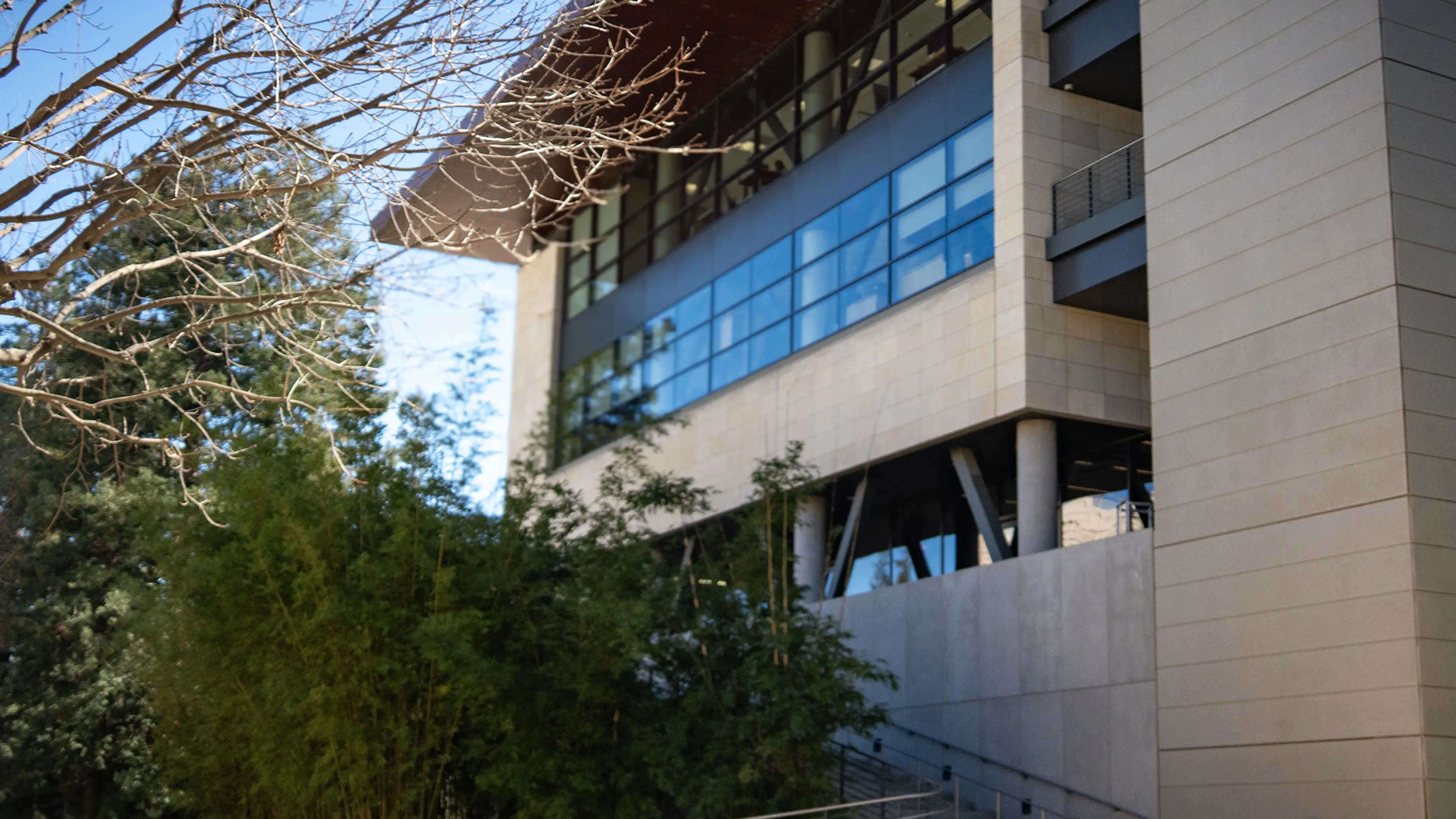
Find Us on Campus

Neurosurgery opens in a new tab
We welcome your inquiries and look forward to connecting with you. Reach out to us through any of the channels below.
Address
Stanford Department of Neurosurgery
Center for Academic Medicine
453 Quarry Road
Palo Alto, CA 94304
opens in a new tab
Phone
(650) 723-0320 opens in a new tab
Inquiries
neurosurgery@stanford.edu opens in a new tab

Directories

  • Our Faculty
  • Instructors
  • Clinical Instructors and Fellows
  • Residents
  • Advanced Practice Providers
  • Clinical Trials Team