Bulletin

Interested in attending Stanford?
Visit Undergraduate Admissions opens in a new tab or Graduate Admissions opens in a new tab.

Resources

  • About Stanford
  • About Bulletin
  • Academic Calendar opens in a new tab
  • Bulletin Archive
  • Enrollment Overview opens in a new tab
  • Enrollment Deadlines opens in a new tab
  • Degrees at a Glance

Schools

  • Doerr School of Sustainability opens in a new tab
  • Graduate School of Business opens in a new tab
  • Graduate School of Education opens in a new tab
  • School of Engineering opens in a new tab
  • School of Humanities and Science opens in a new tab
  • School of Law opens in a new tab
  • School of Medicine opens in a new tab
Give Feedback

Stanford University is accredited by the Accrediting Commission of Senior Colleges and Universities of the Western Association of Schools and Colleges opens in a new tab.

Give Feedback
Stanford
University
  • Stanford Home
  • Maps & Directions
  • Search Stanford
  • Emergency Info
  • Terms of Use
  • Privacy
  • Copyright
  • Trademarks
  • Non-Discrimination
  • Accessibility
© Stanford University.  Stanford, California 94305.
Skip to main content
Stanford University
Bulletin
Cancer Biology
School of Medicine
Skip past section menu
Schools, Departments, and Organizations
  • Doerr School of Sustainability
  • Graduate School of Business
  • Graduate School of Education
  • Law School
  • School of Engineering
  • School of Humanities and Sciences
  • School of Medicine
    • Anesthesiology, Perioperative, and Pain Medicine
    • Biochemistry
    • Bioengineering
    • Biomedical Data Science
    • Biomedical Physics
    • Biophysics
    • Cancer Biology
    • Cardiothoracic Surgery
    • Chemical and Systems Biology
    • Clinical Informatics Management
    • Community Health and Prevention Research
    • Comparative Medicine
    • Department of Medicine
    • Dermatology
    • Developmental Biology
    • Emergency Medicine
    • Epidemiology
    • Genetics
    • Gynecology and Obstetrics
    • Health Policy
    • Immunology
    • Microbiology and Immunology
    • Molecular and Cellular Physiology
    • Neurobiology
    • Neurology and Neurological Sciences
    • Neurosciences Program
    • Neurosurgery
    • Ophthalmology
    • Orthopedic Surgery
    • Otolaryngology
    • Pathology
    • Pediatrics
    • Physician Assistant Studies
    • Psychiatry and Behavioral Sciences
    • Radiation Oncology
    • Radiology
    • Stem Cell Biology and Regenerative Medicine
    • Structural Biology
    • Surgery
    • Translational Research and Applied Medicine
    • Urology
Units and other organizations
  • Athletics, Physical Education, and Recreation
  • Center for Teaching and Learning
  • SLAC National Accelerator Laboratory
  • Vice Provost for Graduate Education
  • Vice Provost for Undergraduate Education
Loading department
Loading programs and courses
Loading department contacts
  1. Home
  2. Schools, Departments, & Units
  3. School Of Medicine
  4. Cancer Biology

Cancer Biology

About Us

Established in 1978, the Cancer Biology Ph.D. Program at the Stanford University School of Medicine is a premier, interdisciplinary doctoral training program. Over the past four decades, the field of oncology has undergone a dramatic revolution—spanning the discovery of oncogenes and tumor suppressor genes, the mapping of DNA damage and repair pathways, the delineation of cell cycle regulation, and a deep understanding of angiogenesis, hypoxia responses, and the molecular basis of metastasis. Today, advanced genomic and proteomic profiling continues to redefine the taxonomy of cancer diagnosis and drive the design of targeted chemotherapies and immunotherapies.

The Cancer Biology Program is designed to position students at the leading edge of these discoveries. Stanford provides an unparalleled ecosystem for interdisciplinary cancer research; the School of Medicine, the School of Humanities and Sciences, and the School of Engineering are all co-located on a single, contiguous campus. This close physical proximity fosters seamless collaboration across biological sciences, clinical medicine, physical sciences, and engineering.

The program is deeply committed to fostering a diverse and inclusive community of scholars. It actively welcomes and supports students from all backgrounds, cultures, and life experiences, recognizing that a diverse student body drives the unique perspectives and creative innovations required to solve the complex puzzle of cancer.

Academic Curriculum and Training Timeline

The Ph.D. curriculum is carefully structured to transform entering graduate students into independent, successful research scientists and educators within a four-to-five-year timeframe:

  • First-Year Foundational Coursework: Students build a comprehensive, multi-scale understanding of the molecular, genetic, cellular, and pathobiological mechanisms of cancer. Uniquely, the curriculum also educates students on the current clinical state of human cancer diagnosis, imaging, and therapeutic care.

  • Laboratory Rotations: During their first year, students complete three laboratory rotations to explore different research areas, methodologies, and mentoring styles before selecting their primary dissertation advisor.

  • Dissertation Research: By the end of the first year, students select their research advisor from a broad pool of participating faculty across basic and clinical departments, officially launching their independent dissertation projects.

  • Qualifying Examination: To advance to candidacy, students must successfully complete a comprehensive qualifying examination before the end of December in their second year.

  • Annual Cancer Biology Retreat: A hallmark of the program, this annual scientific retreat provides students with a professional platform to present their ongoing research, receive feedback, and network with faculty and peers.

Interdisciplinary Research and Support

The program currently hosts approximately 67 graduate students pursuing doctoral research across a diverse array of clinical and basic science departments.

  • Flexible Faculty Alignment: Students are not restricted to a single department when choosing their research advisors; they can collaborate with participating faculty across the School of Medicine and the School of Humanities and Sciences.

  • Funding and Resources: A significant number of students in the program are supported by a prestigious institutional training grant from the National Cancer Institute (NCI), alongside departmental and university fellowships.

Our Offerings

  • Graduate Programs

    Explore the programs offered by this organization.
  • Courses

    Explore the courses offered by this organization.

Find Us on Campus

Cancer Biology opens in a new tab
We welcome your inquiries and look forward to connecting with you. Reach out to us through any of the channels below.
Address
Cancer Biology Program
Stanford University School of Medicine
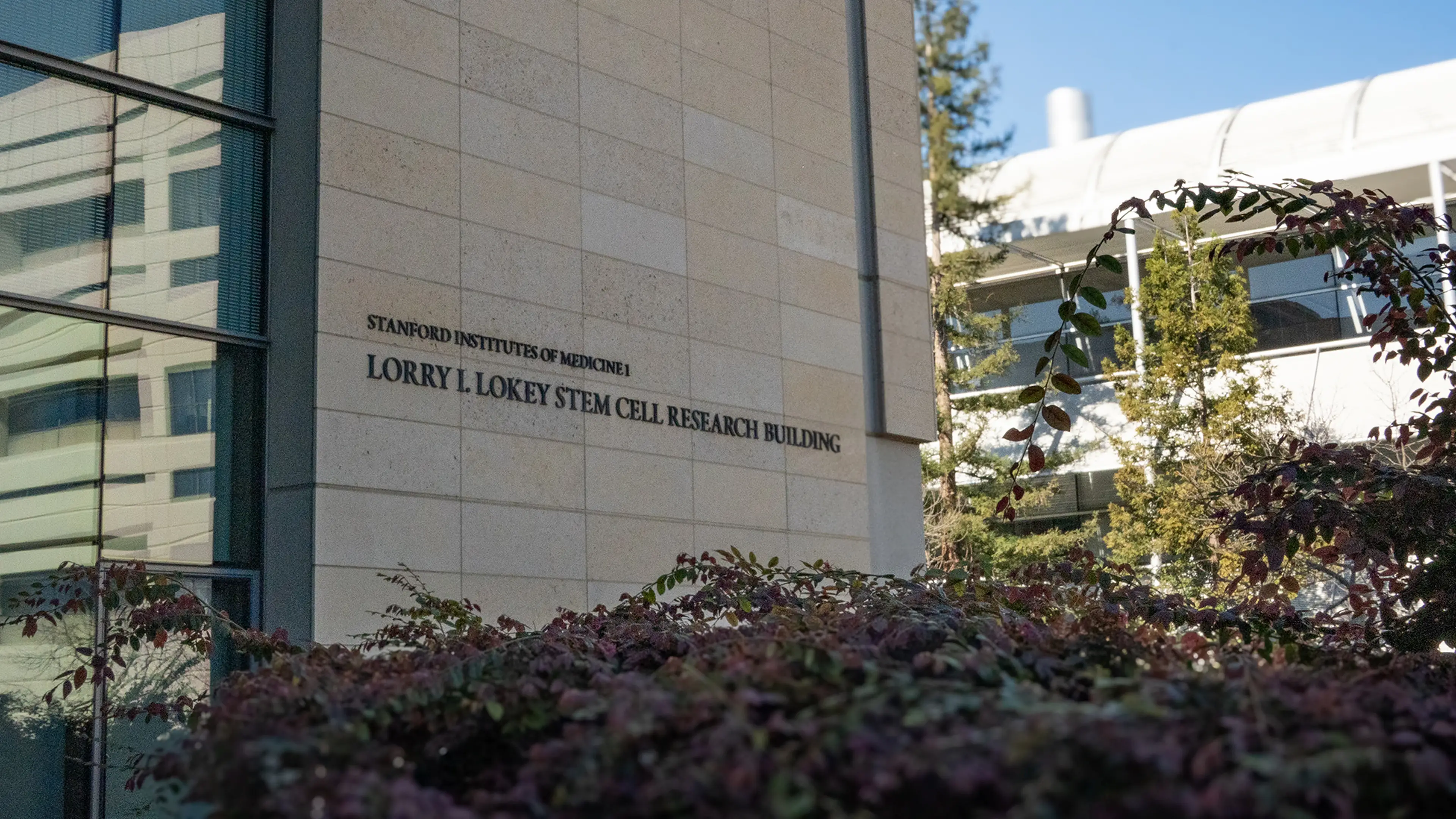
Lorry I. Lokey Stem Cell Research Building
265 Campus Drive, Suite G2103, Mail Code: 5456
Stanford, CA 94305
opens in a new tab
Phone
(650) 723-6198 opens in a new tab
Inquiries
biosciences@stanford.edu opens in a new tab

Directories

  • Participating Faculty

Key Contacts

  • Erinn Rankin
    Director of Graduate Studies
  • Aaron Newman
    Director of Graduate Studies
  • Grace Batoon
    Student Service
  • Patty Gerardo
    Student Services