
2.1 Baccalaureate Degree Requirements
Stanford University awards B.A. and B.S. degrees to students who complete at least 180 units, fulfill general education and major requirements, and meet residency requirements. Students may also pursue a B.A.S.
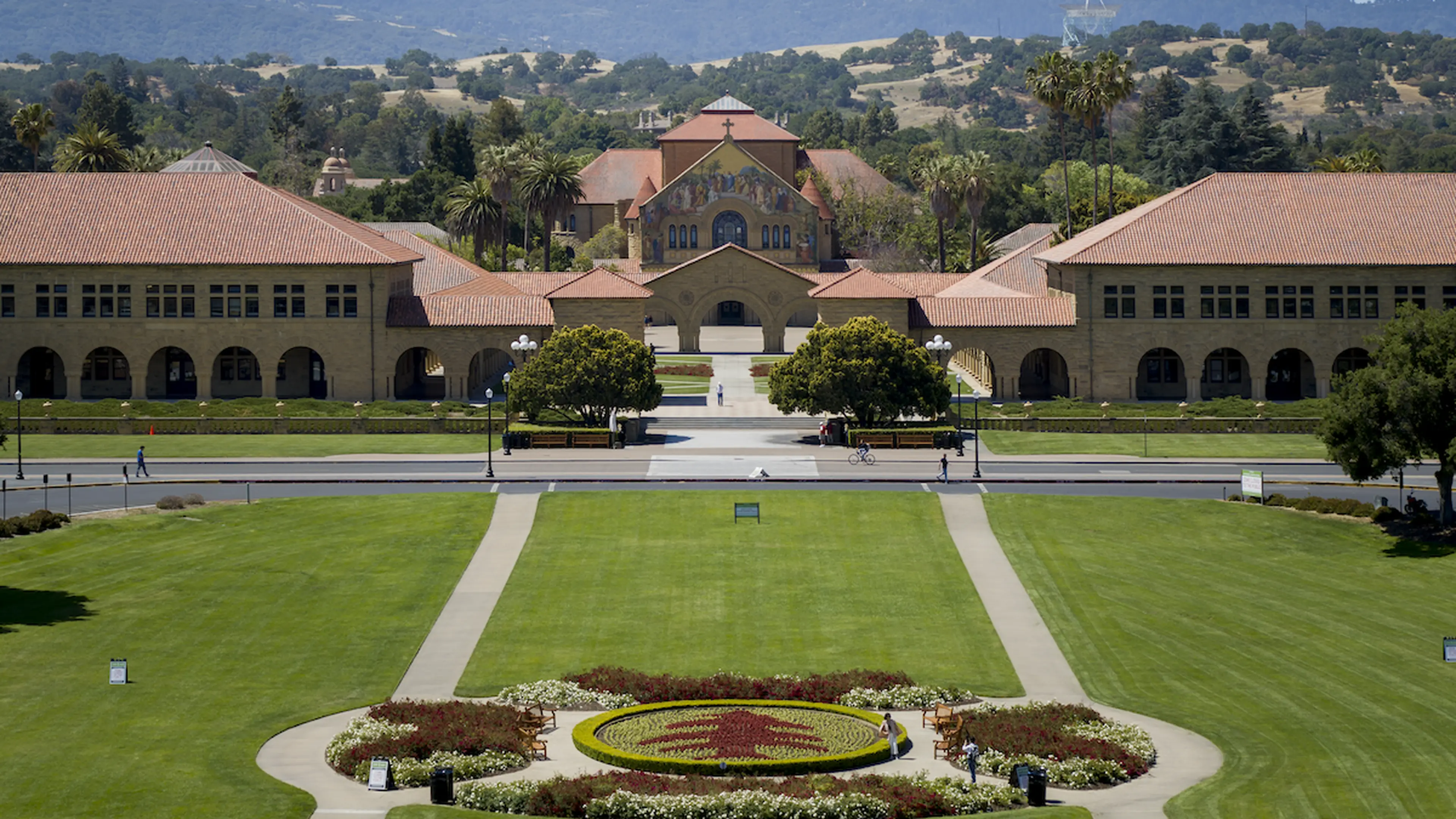
Find the official policies that govern our student and academic community.
To meet Stanford’s standards for satisfactory academic progress and graduation, undergraduates must maintain at least a 2.0 GPA and steady unit completion, typically 180 units over four years, with quarterly and multi-quarter minimum unit thresholds. Failure to meet these standards may result in escalating academic progress statuses, beginning with academic notice and potentially progressing to academic probation and, if conditions remain unmet, temporary separation from the University (academic suspension).
Undergraduates must maintain a minimum 2.0 cumulative GPA and a quantitative unit requirement for satisfactory academic progress. In addition, a minimum 2.0 cumulative GPA is required for conferral of a baccalaureate degree.
Undergraduates normally are expected to plan their academic programs so that they earn 180 units in four years (twelve quarters of enrollment), including the requirements for a major along with the COLLEGE, General Education (Ways/GERs), Writing and Rhetoric, and Language Requirements. Standard pace toward degree completion is, on average, 45 units per academic year for four years, leading to at least 180 units with a cumulative GPA of at least 2.0, resulting in a baccalaureate degree.
Full-time enrollment is considered to be enrollment in a minimum of 12 units of course work per quarter at Stanford. As a general proposition, work necessary to complete units from previous quarters does not count toward the 12 units necessary for full-time enrollment in the current quarter. Under extenuating circumstances, students may submit a request to the C-USP Subcommittee on Academic Progress (S-AP) to enroll in fewer than 12 units. All students registering for fewer than 12 units should consider the effects of that registration on their degree progress, visas, residency requirements, varsity athlete status, and their eligibility for financial aid and awards or their eligibility for or deferment of student loans, as well as their eligibility for on-campus student employment.
While undergraduates are expected to register for a minimum of 12 units per quarter, they are required to earn at least 9 units each quarter (by the grade submission deadline) and at least 36 units over their most recent three quarters of Stanford enrollment (by the grade submission deadline of the third quarter). In addition, students are expected to maintain a cumulative GPA of at least 2.0. (Transfer work completed at other institutions is not considered in these calculations.)
Until conferral of the undergraduate degree, a student’s academic progress is monitored by the office of Academic Advising opens in a new tab, under the office of the Vice Provost for Undergraduate Education (VPUE) as a designee of the Faculty Senate Committee on Undergraduate Standards and Policy (C-USP) and its Subcommittee on Academic Progress (S-AP).
An undergraduate student earning fewer than 9 units per quarter or fewer than 36 units over three quarters, or earning less than a 2.0 cumulative GPA, is placed on academic notice. (Students with documented disabilities who have been approved for a Reduced Course Load should contact the Office of Accessible Education opens in a new tab for additional information on academic progress requirements.) Additionally, a student may be placed directly on academic probation (further defined in this section) without first being placed on academic notice if the student has had a prior academic suspension status.
Students with an academic notice status are required, in the next quarter of enrollment at the University (excluding Summer), to earn a minimum of 12 units of course work with a minimum 2.0 quarterly GPA by the grade submission deadline, and also achieve and maintain a cumulative GPA of at least 2.0 in order to re-establish satisfactory academic progress. If conditions are unaccomplished, the academic progress status may then escalate or ‘step-up’ to academic probation.
Students with an academic probation status are required, in the next quarter of enrollment at the University (excluding Summer), to earn a minimum of 12 units of course work with a minimum 2.0 quarterly GPA by the grade submission deadline, and also achieve and maintain a cumulative GPA of at least 2.0. When the conditions for academic probation are accomplished, the academic progress status will de-escalate or ‘step-down’ to academic notice for one (1) remaining quarter, where the student must meet the conditions of academic notice in order to re-establish satisfactory academic progress. If conditions are unaccomplished, the academic progress status may then escalate or ‘step-up’ to consideration for academic suspension.
A Stanford Summer Session quarter in which a student earns 11 or more units may count (upon request) toward the above conditions for academic notice or academic probation.
All undergraduates validly registered at Stanford are considered to be in good standing with the University for the purposes of enrollment certification and athletic participation.
Units are granted for courses completed with grades 'A,' 'B,' 'C,' 'D,' 'Satisfactory' ('CR' or 'S'), and 'L.' Courses graded 'N' are counted provisionally as units earned, provided the student enrolls in the continuing segment of that course the following quarter. When the course is completed satisfactorily, the student receives all units for those enrollments. No units are granted for a course in which the student receives an 'I' or a 'GNR' until the course is completed satisfactorily and the final grade reported. No units are granted for a course in which the student receives a 'W'.
Students who receive all 'W's as the result of a Leave of Absence (either voluntary or involuntary) are subject to Academic Progress policies.
The C-USP Subcommittee on Academic Progress (S-AP), in its discretion, is empowered to place conditions on students with an academic progress status (e.g., academic notice, academic probation, etc.) with regard to enrollment and participation in programs and activities. In addition, students with an academic notice status require approval in advance from Academic Advising opens in a new tab, Residential Education opens in a new tab, and the Overseas Studies Program opens in a new tab office or Stanford in Washington Program opens in a new tab office or Stanford in New York or Stanford at Sea opens in a new tab in order to participate in Stanford's Residential Education staffing roles or in an Overseas Studies Program or Stanford in Washington Program or Stanford in New York or Stanford at Sea; while students on other statuses (e.g., academic probation, etc.) are ineligible to participate in these programs.
Students receiving federal student aid funds must maintain satisfactory academic progress standards that may be more strict than those outlined here. See the Financial Aid Office website opens in a new tab for details.
A student who earns fewer than 9 units by the grade submission deadline in the most recent quarter of enrollment, or fewer than 36 units over the three most recent quarters of enrollment (excluding Summer) by the grade submission deadline of the third quarter of enrollment, or who has a cumulative GPA of less than 2.0 may be placed on an academic notice status.
A student shall be removed from academic notice and re-establish satisfactory academic progress if, in the next quarter of enrollment at the University (excluding Summer), the student earns a minimum of 12 units of course work with a minimum 2.0 quarterly GPA by the grade submission deadline, and achieves and maintains a cumulative GPA of at least 2.0. A student may also be removed from academic notice at the discretion of the C-USP Subcommittee on Academic Progress (S-AP) or its designees as a result of a review of individual records.
A student who, while on academic notice, earns fewer than 12 units by the grade submission deadline, or earns a quarterly GPA below 2.0, or has a cumulative GPA of less than 2.0 may be placed on academic probation status. In addition, and on occasion, a student may also be placed directly on academic probation without first being placed on academic notice if the student has had a prior academic suspension status.
A student shall be removed from academic probation if, in the next quarter of enrollment at the University (excluding Summer), the student earns a minimum of 12 units of course work with a minimum 2.0 quarterly GPA by the end of the grade submission deadline, and achieves a cumulative GPA of at least 2.0. A student may also be removed from academic probation at the discretion of the C-USP Subcommittee on Academic Progress (S-AP) or its designees as a result of a review of individual records.
When conditions for the first quarter of academic probation are accomplished, the academic progress status will de-escalate or ‘step-down’ to academic notice for one (1) remaining quarter (see above).
A student who, while on academic probation, earns fewer than 12 units by the grade submission deadline, or earns a quarterly GPA below 2.0, or has a cumulative GPA of less than 2.0 may be placed on academic suspension.
While students placed on academic suspension for the first time are suspended for one year, students placed on academic suspension a subsequent time may be suspended for up to three years.
Students suspended for one year are not eligible to enroll at the university for four quarters (including Summer Quarter) following the quarter in which the academic suspension was issued. Students suspended for up to three years are not eligible to enroll at the university for up to twelve quarters (including Summer Quarter) following the quarter in which the academic suspension was issued.
Students are expected to complete their academic suspension in full. As well, until reinstatement, students who are suspended are not eligible for the privileges associated with registration -- these include living in University housing, involvement or participation in any official or voluntary student organizations, and involvement in any activity for which enrollment is a requirement. Finally, students who have been suspended are not permitted to audit.
The C-USP Subcommittee on Academic Progress (S-AP) or its designees, in its discretion, may impose conditions of the academic suspension, and/or to a return from the academic suspension.
Students who receive an academic suspension and believe they have information that presents relevant and compelling material previously unknown to the Subcommittee or its designees, such that reconsideration for immediate continuation of their studies without a break in enrollment is suitable, should meet with an Undergraduate Advising Director (UAD) from the office of Academic Advising opens in a new tab under the office of the Vice Provost for Undergraduate Education (VPUE) to discuss their circumstances. Students with such relevant circumstances may submit a Request for Reconsideration of Academic Suspension. Granting such requests is at the discretion of the Subcommittee or its designees, and may be based on factors or considerations regarded as relevant including the demonstrated or perceived likelihood for immediate academic success. Requests for reconsideration submitted after the deadline are not accepted. A student may also grieve an academic suspension under the Student Academic Grievance Procedure opens in a new tab.
An academic suspension may not be substituted, in part or in whole, by a Leave of Absence.
In order to request re-enrollment after the suspension period has been completed, students are required to submit an application for reinstatement by way of a properly endorsed Request to Return and Register in Undergraduate Study form. Instructions, including deadlines for requesting to return, should be obtained from the office of Academic Advising opens in a new tab, under the office of the Vice Provost for Undergraduate Education (VPUE). The C-USP Subcommittee on Academic Progress (S-AP), or those designated by the Subcommittee, acts upon all requests concerning academic progress and its statuses, including a Request to Return and Register after completion of the academic suspension. The Subcommittee or its designees may determine whether the application for reinstatement to return will be approved or not, and/or the conditions a student must meet in order to return. Request to Return and Register decisions are at the discretion of the University and may be based on activities while away from campus, the perceived potential for successful completion of the program, as well as any other factors or considerations regarded as relevant to the Vice Provost for Undergraduate Education or the Subcommittee or its designees.
Students who return from an academic suspension receive the academic progress status "academic probation", and must adhere to and comply with the policies above and elsewhere related to that status upon their return. Questions concerning academic progress or Requests to Return and Register in Undergraduate Study should be directed to the office of Academic Advising opens in a new tab, under the office of the Vice Provost for Undergraduate Education (VPUE).
Students returning from academic suspension should also contact appropriate campus offices, such as Housing and Financial Aid, regarding those offices' deadlines and procedures.
Written notification that a student is on academic notice, academic probation, or academic suspension is sent to the student, to the student's academic advisor(s), and to other relevant university offices and individuals as soon as possible after the close of the quarter. Students also receive written notification of the outcome of their Request for Reconsideration of Academic Suspension, or their Request to Return and Register in Undergraduate Study after completion of their academic suspension. Current student status, such as whether a student is enrolled or not, is considered Directory Information for the purposes of FERPA at Stanford, and Stanford may provide either parent(s) or guardian(s) written notification of a change in student status. Provided that a student consents, or the student is a dependent for income tax purposes, Stanford may also provide either parent(s) or guardian(s) written notification that the student is on academic notice, academic probation, academic suspension, or Leave of Absence (either voluntary or involuntary). Other FERPA exceptions may also apply.
Questions regarding undergraduate academic progress, and academic progress statuses, should be directed to the office of Academic Advising, under the office of the Vice Provost for Undergraduate Education (VPUE). The office of Academic Advising can be contacted by email at advising@stanford.edu.
The Office of Academic Advising opens in a new tab, under the office of the Vice Provost for Undergraduate Education (VPUE)
advising@stanford.edu
Stanford University awards B.A. and B.S. degrees to students who complete at least 180 units, fulfill general education and major requirements, and meet residency requirements. Students may also pursue a B.A.S.
Stanford’s General Education Requirements form a core part of the undergraduate experience, fostering broad intellectual and social competencies while giving students flexibility to explore interests, develop critical skills, and connect their
Students are expected to make steady progress toward their degree, and failure to complete requirements within 12–18 quarters may result in imposed conditions or possible discontinuation for lack of academic progress.
Undergraduate students are required to take at least 12 units per quarter. Graduate students must take at least 8 units per quarter, but departments and schools may set a higher minimum.