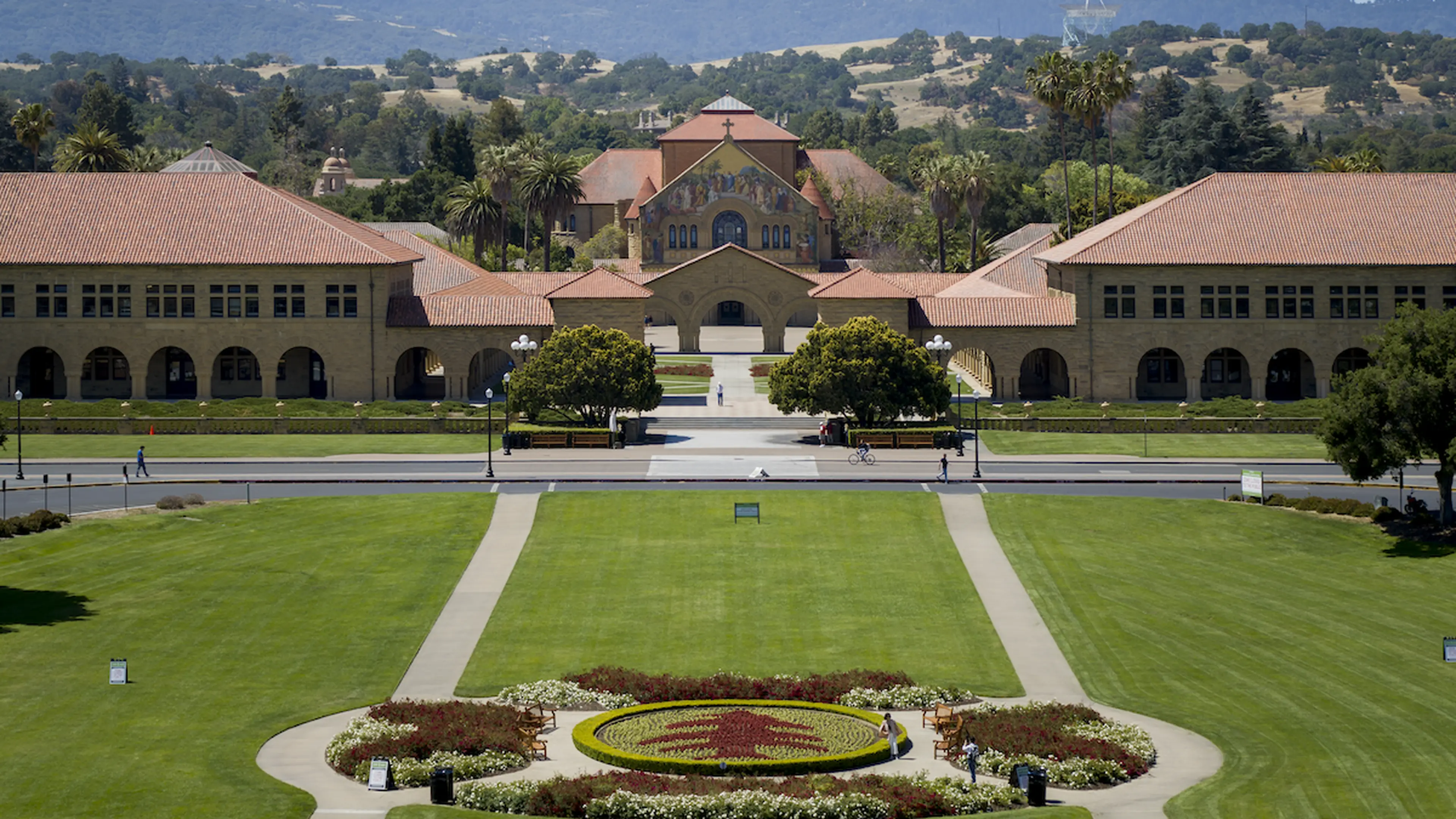
For each Stanford advanced degree, there is an approved course of study that meets university and department requirements. The University's general requirements, applicable to all graduate degrees at Stanford, are described below. University requirements pertaining to only a subset of advanced degrees are described in the Master's Degree Requirements or Doctoral Degree Requirements Bulletin pages
Graduate students are assigned faculty advisors to provide academic, research, and professional guidance, with degree programs responsible for establishing advising expectations, supporting advisor changes when needed, and ensuring dissertation advisors and advising relationships comply with university requirements.
Each type of graduate degree offered at Stanford (for example, Master of Science, Doctor of Philosophy) has a residency requirement based on the number of academic units required for the degree. These residency requirements and the maximum allowable transfer units for each degree type are listed below.
Students pursuing an Engineer, D.M.A., or Ph.D. may apply for transfer credit for graduate work done at another institution after at least one quarter of enrollment, with certain limitations.
Once per quarter, continuing graduate students may submit a Graduate Program Authorization Petition in Axess to request additions or changes to their graduate program, rather than applying through Graduate Admissions. If a graduate student wishes to terminate enrollment (permanently or indefinitely) in one or more of their current graduate degree programs, they may submit a request to Permanently Withdraw from a Graduate Degree Program.
Graduate students must complete program-specific requirements and maintain minimum academic progress standards, including passing a required number of units each term and sustaining at least a 3.0 GPA. Additional rules govern degree-level coursework, TGR status, and continued enrollment, with failure to meet standards leading to review, required improvement plans, or possible dismissal depending on program policies and performance.
Details university requirements for master’s degrees. In addition to completing the general requirements for advanced degrees and the requirements specified by their degree program, candidates for master's degrees must meet the general master’s degree requirements and degree-specific requirements listed below. Degree programs may have additional requirements for the degree.
Admission to candidacy for the doctoral degree is a judgment by the faculty of the student’s degree program on the potential to successfully complete the requirements of the degree program. Students are expected to complete degree program qualifying procedures and apply for candidacy by the end of their second year in the doctoral program. Candidacy is valid for five years, subject to satisfactory academic progress.
PhD students may pursue a minor in another department (but not their own), typically requiring at least 20 graduate units completed at Stanford before TGR status, with specific requirements set by the minor department. Minor coursework can count toward the PhD but cannot be double-counted for a master’s degree or another PhD minor, and this option is not available to other graduate students.
A joint degree program (JDP) is a specified combination of degree programs or degree types in which a student is enrolled in two graduate degree programs concurrently. JDPs are developed and proposed by the relevant academic units with agreement of the deans of the schools affected.
Stanford’s policy supports pregnant and parenting graduate students by offering flexible enrollment options, academic accommodations, leave policies, funding protections, and lactation support while prohibiting discrimination under Title IX and FERPA-related privacy standards. Graduate students may remain enrolled with accommodations or take a pregnancy or parental leave, with provisions for extended academic timelines, continued access to certain university resources, and temporary relief from teaching or research duties depending on their role and funding status.
Graduate students at Stanford must meet academic, programmatic, and professional behavior standards to remain in good standing, and departments may initiate dismissal if these expectations are not met. The process requires written warnings, consideration of student input, formal committee review and vote, documentation of decisions, and opportunities for reconsideration or appeal, with additional procedures governing progress both before and after candidacy.
Stanford is an accredited institution that prepares and recommends candidates for California teaching credentials through programs for both elementary and secondary education.
Every graduate-level degree program at Stanford (other than the professional degree programs of JD, MBA, and MD) must have a designated faculty member who oversees graduate studies, commonly known as the “Director of Graduate Studies” (DGS).
Stanford provides several pathways for doctoral students whose faculty advisor transitions to Stanford, including remaining at their home institution, applying to Stanford, participating as an Exchange Scholar, or continuing research at Stanford through non-matriculated Student of New Faculty (SNF) status. The SNF option allows advanced doctoral students to complete dissertation research at Stanford under their advisor while remaining enrolled at their home institution, with defined policies around enrollment, funding, visa status, student responsibilities, and university privileges.