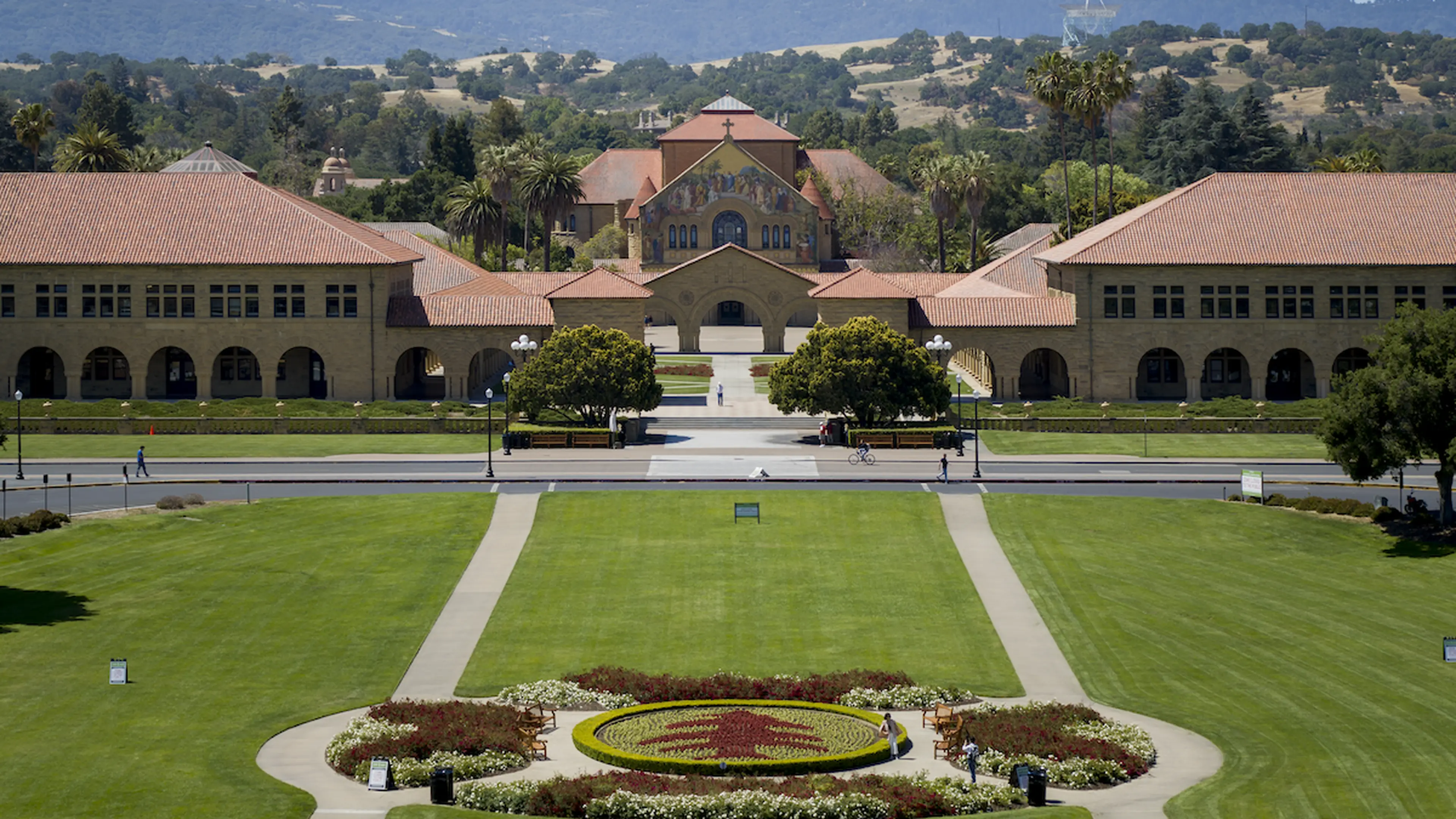
Stanford University awards B.A. and B.S. degrees to students who complete at least 180 units, fulfill general education and major requirements, and meet residency requirements. Students may also pursue a B.A.S. (two non-overlapping majors leading to different degree types) or dual B.A. and B.S. degrees, which require at least 225 units. The university generally does not grant second bachelor’s degrees except in limited cases for Stanford graduates seeking a different degree type.
Stanford awards a Bachelor’s Degree with Distinction to the top 15% of the graduating class based on cumulative GPA calculated through Winter Quarter, with the distinction noted on diplomas and transcripts after Spring Commencement. Departments and certain interdisciplinary programs may also recommend students for honors in recognition of advanced, independent work beyond major requirements.
Stanford’s General Education Requirements form a core part of the undergraduate experience, fostering broad intellectual and social competencies while giving students flexibility to explore interests, develop critical skills, and connect their academic experiences alongside their major.
A major is intended to allow students to study a particular subject in great depth. Students must declare their major by the end of their sophomore year. Students can declare multiple majors but must meet the requirements for each major separately without overlap.
Students completing a bachelor's degree may declare one or more minors in addition to their major. Minors must be officially declared by the deadline for the student's application to graduate. A minor is a coherent program of study defined by the department or degree program and consists of no fewer than six courses of 3 or more units to a maximum of 36 units of letter-graded work.
To meet Stanford’s standards for satisfactory academic progress and graduation, undergraduates must maintain at least a 2.0 GPA and steady unit completion, typically 180 units over four years, with quarterly and multi-quarter minimum unit thresholds. Failure to meet these standards may result in escalating academic progress statuses, beginning with academic notice and potentially progressing to academic probation and, if conditions remain unmet, temporary separation from the University (academic suspension).
Students are expected to make steady progress toward their degree, and failure to complete requirements within 12–18 quarters may result in imposed conditions or possible discontinuation for lack of academic progress.
Stanford undergraduates may submit scores for certain advanced-level secondary school exams to be awarded units toward their bachelor's degree. These test credits count, along with college transfer credit, toward the total allowed number of external units. Accepted exam boards and subject tests are specific to a student's matriculation year and re-evaluated annually by academic departments. Credit is calculated and awarded by the Office of the University Registrar.
Stanford University may grant transfer credit for work completed at regionally accredited institutions or internationally recognized colleges and universities. No more than 45 (90 for transfer students) quarter units of credit for external work may be counted toward a Stanford bachelor's degree.
For undergraduate students, a maximum of 8 units earned in activity courses can count towards the required 180 units (or 225 for dual degrees) for a bachelor's degree. Up to 36 units, including activity courses, taken for a Pass/Fail grading basis may fulfill degree requirements, with transfer students allowed a maximum of 27 units. Concurrent enrollment between Stanford and another institution is capped at 20 quarter units, and satisfactory academic progress is based solely on Stanford coursework.
Undergraduate students are expected to maintain in person academic residency while enrolled in courses at Stanford University.
Courses may not be double-counted across majors or minors except for approved foundational courses and school requirements, subject to university policy and any more restrictive departmental rules.