
2.1 Baccalaureate Degree Requirements
Stanford University awards B.A. and B.S. degrees to students who complete at least 180 units, fulfill general education and major requirements, and meet residency requirements. Students may also pursue a B.A.S.
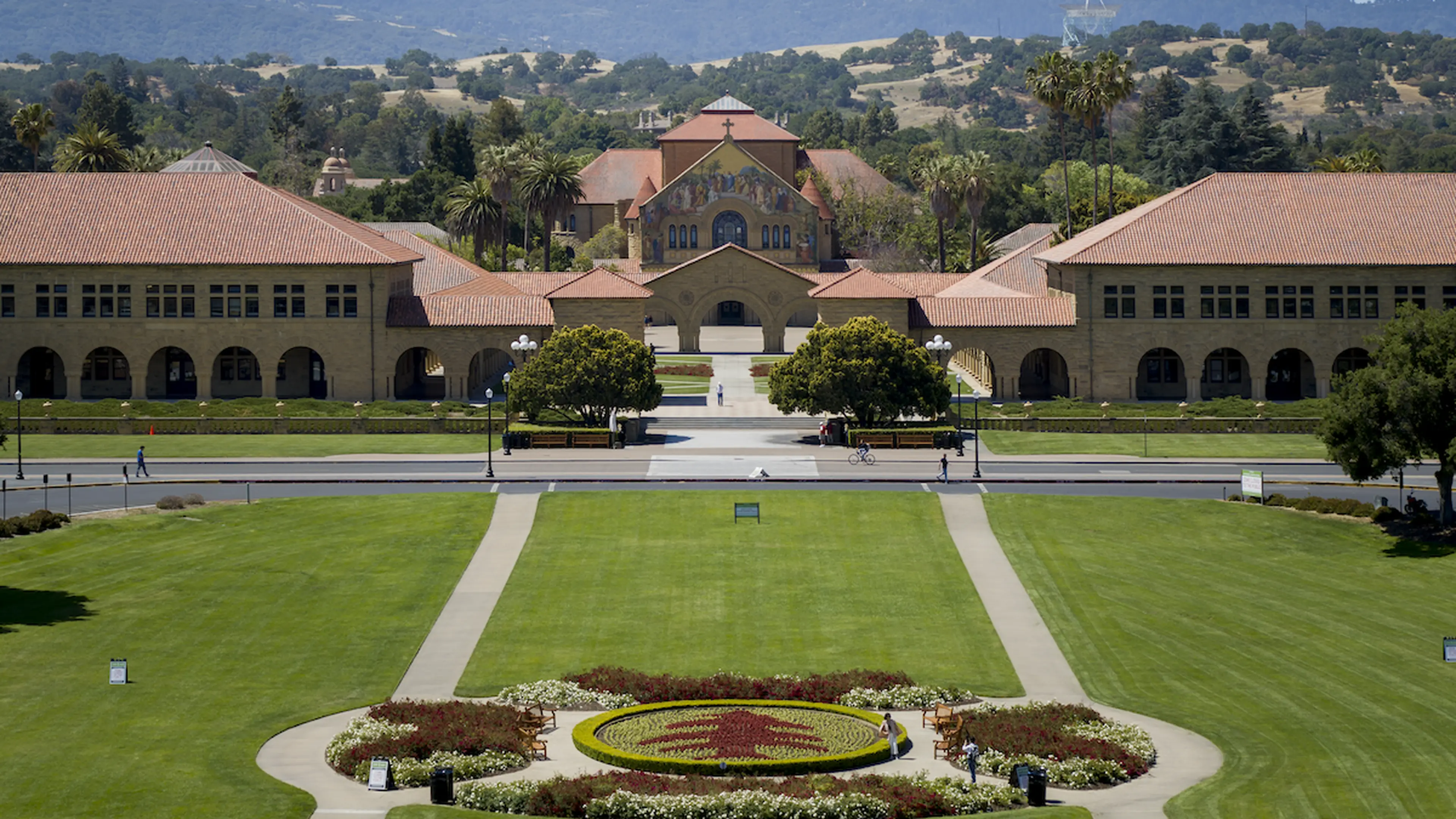
Find the official policies that govern our student and academic community.
The primary purpose of the major is to encourage each student to explore a subject area in considerable depth. This in-depth study complements the breadth of study promoted by the General Education Requirements and, in many cases, by a student's choice of electives. Work in depth permits practice in critical analysis and the solving of problems. Because of its depth, such study also provides a sense of how knowledge grows and is shaped by time and circumstances.
The structure of a major should be a coherent reflection of the logic of the discipline it represents. Ideally, the student should be introduced to the subject area through a course providing a general overview, and upper-division courses should build upon lower-division courses. The course of study should, if feasible, give the student the opportunity and responsibility of doing original, creative work in the major subject. Benefits of the major program are greatest when it includes a culminating and synthesizing experience such as a senior seminar, an undergraduate thesis, or a senior project.
Undergraduates must select a major by the end of their sophomore year. All undergraduate major programs listed in this bulletin may be declared, except for certain honors degree programs that require advance application and admission as outlined in their program requirements. Students may use Axess to declare, drop, or change a major. Further information about the process of declaring through Axess can be found on the Student Services webpage opens in a new tab. Adding, dropping or changing a major may alter a student's total required units for degree completion, or expected term of graduation/duration of program, and should only be done after consultation with academic advisors. Students may not declare a Bachelor of Arts and a Bachelor of Science in the same major. Likewise, they may not declare the same major for their bachelor's degree and as a secondary major.
For general academic advising regarding majors, students should consult the office of Academic Advising opens in a new tab, under the office of the Vice Provost for Undergraduate Education (VPUE). For specific advising within the major, students should consult with the Student Services Officer or another representative from that academic department/program.
Check the individual department or program Bulletin pages for the undergraduate degrees offered and for specific major requirements. If an area of study has no baccalaureate degree, that discipline is not available as a regular undergraduate major.
Faculty set the minimum requirements for the major in each department. These requirements usually allow latitude for tailoring a major program to a student's specific educational goals. The responsibility for developing a major program within department or program requirements lies ultimately with the individual student working in consultation with the major adviser.
Starting in the academic year 2021-2022 the Future of the Major legislation requires majors to have a minimum of 60 units and a maximum of 100 units, with the exception of approved ABET-accredited majors which can mandate higher unit counts for accreditation purposes.
As part of their major, students must complete courses designated to fulfill the “Writing in the Major” general education requirement. Additionally, all majors require completion of a capstone, through which they are expected to integrate knowledge and skills developed in the major, and learn to think independently with the tools of the discipline.
For a limited number of qualified students, many departments and programs offer special programs leading to the bachelor’s degree with honors in their chosen major. A student may apply to the major department or program for acceptance into the honors program. If accepted, the student must formally declare the honors program/major in Axess. Demands on the student may vary, but all honors programs encourage creative, independent work at an advanced level in addition to the major requirements.
The guidelines set forth here are deliberately general; implementation must take into account the specific needs of a student's program and the nature of the discipline or disciplines involved. The exercise of responsibility in achieving the desired educational balance belongs first with the student, who, after all, has the strongest interest in the value of his or her education. It belongs secondarily to departments and major programs, which must set the requirements of competence in the many majors offered.
Although most students declare only one major, a student may formally declare more than one major within a single bachelor's degree (B.A., B.S., or B.A.S.) program (referred to as a double major). The student may do that either at the time of initial major declaration or, as may be more advisable given the planning required to complete more than one major, by amending the original declaration. The student's major departments or programs have access routinely to all information pertinent to that student's academic record (for example, course and grade information), and each is expected to provide advising and other assistance. To be awarded a bachelor's degree with multiple majors, the student must formally declare all majors through Axess to the Office of the University Registrar.
Students should review the Undergraduate Double-Counting Policy in this Bulletin for information on satisfying the requirements for combinations of majors and/or minors.
If the pursuit of multiple majors (or secondary majors, or minors) unduly delays an undergraduate's progress through Stanford, the University reserves the right to limit a student to a single major, and/or to confer a degree on a student who has completed all of the requirements for a degree even though the student has not applied to graduate; such an individual would then be subject to the University's usual rules and restrictions regarding future enrollment or registration.
For information regarding dual degrees, see Baccalaureate Degree Requirements.
Secondary majors should only be considered if a student is unable to complete the multiple majors in which they have declared while staying in compliance with the University and declared departments' double-counting policies. Secondary majors are listed on the transcript but are not listed on the diploma.
Undergraduate students with questions about the major should consult with representatives in the major department or program. For general academic advising regarding majors, undergraduate students should contact the Office of Academic Advising opens in a new tab, under the office of the Vice Provost for Undergraduate Education (VPUE).
Undergraduate students may review the guidelines for formally declaring a major opens in a new tab.
Stanford University awards B.A. and B.S. degrees to students who complete at least 180 units, fulfill general education and major requirements, and meet residency requirements. Students may also pursue a B.A.S.
Stanford’s General Education Requirements form a core part of the undergraduate experience, fostering broad intellectual and social competencies while giving students flexibility to explore interests, develop critical skills, and connect their
To meet Stanford’s standards for satisfactory academic progress and graduation, undergraduates must maintain at least a 2.0 GPA and steady unit completion, typically 180 units over four years, with quarterly and multi-quarter minimum unit thresholds.