Bulletin

Interested in attending Stanford?
Visit Undergraduate Admissions opens in a new tab or Graduate Admissions opens in a new tab.

Resources

  • About Stanford
  • About Bulletin
  • Academic Calendar opens in a new tab
  • Bulletin Archive
  • Enrollment Overview opens in a new tab
  • Enrollment Deadlines opens in a new tab
  • Degrees at a Glance

Schools

  • Doerr School of Sustainability opens in a new tab
  • Graduate School of Business opens in a new tab
  • Graduate School of Education opens in a new tab
  • School of Engineering opens in a new tab
  • School of Humanities and Science opens in a new tab
  • School of Law opens in a new tab
  • School of Medicine opens in a new tab
Give Feedback

Stanford University is accredited by the Accrediting Commission of Senior Colleges and Universities of the Western Association of Schools and Colleges opens in a new tab.

Give Feedback
Stanford
University
  • Stanford Home
  • Maps & Directions
  • Search Stanford
  • Emergency Info
  • Terms of Use
  • Privacy
  • Copyright
  • Trademarks
  • Non-Discrimination
  • Accessibility
© Stanford University.  Stanford, California 94305.
Skip to main content
Stanford University
Bulletin
Anthropology
Social Sciences
Skip past section menu
Schools, Departments, and Organizations
  • Doerr School of Sustainability
  • Graduate School of Business
  • Graduate School of Education
  • Law School
  • School of Engineering
  • School of Humanities and Sciences
    • African and African-American Studies
    • American Studies
    • Anthropology
    • Applied Physics
    • Archaeology
    • Art and Art History
    • Biology
    • Biophysics
    • Center for Human Rights and International Justice
    • Chemistry
    • Civic Thought and Practice
    • Classics
    • Communication
    • Comparative Literature
    • Comparative Studies in Race and Ethnicity
    • Data Science
    • Division of Literatures, Cultures, and Languages
    • East Asian Languages and Cultures
    • East Asian Studies
    • Economics
    • English
    • Ethics in Society
    • Feminist, Gender, and Sexuality Studies
    • Freeman Spogli Institute for International Studies
    • French and Italian
    • German Studies
    • History
    • Human Biology
    • Iberian and Latin American Cultures
    • International Policy
    • International Relations
    • Language Center
    • Latin-American Studies
    • Linguistics
    • Mathematics
    • MLA Program
    • Modern Thought and Literature
    • Music
    • Philosophy
    • Physics
    • Political Science
    • Psychology
    • Public Policy
    • Religious Studies
    • Russian, East European, and Eurasian Studies
    • Science, Technology, and Society
    • Scientific Computing and Computational Math
    • Slavic Languages and Literatures
    • Sociology
    • Stanford Arts Institute
    • Stanford Global Studies
    • Stanford in Washington
    • Statistics
    • Symbolic Systems
    • Theater and Performance Studies
    • Urban Studies
  • School of Medicine
Units and other organizations
  • Athletics, Physical Education, and Recreation
  • Center for Teaching and Learning
  • SLAC National Accelerator Laboratory
  • Vice Provost for Graduate Education
  • Vice Provost for Undergraduate Education
Loading department
Loading programs and courses
Loading department contacts
  1. Home
  2. Schools, Departments, & Units
  3. School Of Humanities And Sciences
  4. Anthropology

Anthropology

About Us

The Department of Anthropology at Stanford University is a distinguished center of research and education dedicated to the comprehensive study of human beings and human societies across time and space. Distinct from other social sciences, anthropology at Stanford encompasses the full span of human history and the complete range of human cultures, with a long-standing commitment to highlighting historically marginalized communities.

Attuned to the complex dynamics of social and cultural diversity, the department examines critical issues of power, identity, representation, and inequality. In an increasingly globally-interconnected world, an education in anthropology equips students with the intercultural understanding, critical analytical skills, and methodological versatility required to thrive in diverse professional landscapes. Anthropology graduates are prepared for impactful careers in a wide range of fields, including law, medicine and global health, international business, public service, environmental sustainability, and natural resource management.

Academic and Degree Pathways

The department provides rigorous theoretical and methodological training at all academic levels, offering programs leading to bachelor's, master's, and doctoral degrees:

  • Undergraduate Program (B.A. and Minor): Offering students a robust, interdisciplinary liberal arts foundation. Undergraduates learn to challenge conventional assumptions about human behavior, participate in faculty-led and community-based research, and apply anthropological perspectives to contemporary global challenges.

  • Graduate Programs (M.A. and Ph.D.): Training elite researchers, scholars, and future academic leaders. Graduate students design highly individualized programs of study, combining advanced theoretical coursework with immersive, original field research and ethnographic and archaeological data collection.

Research Subfields and Methodologies

Stanford's Department of Anthropology is characterized by its pluralistic approach, bringing together diverse methodologies to investigate micro- and macro-social processes. Our faculty and students utilize both qualitative and quantitative approaches—ranging from long-term ethnographic participant observation and linguistic analysis to quantitative ecological modeling and archaeological excavation.

Key areas of specialization and inquiry within the department include:

  • Sociocultural Anthropology: Exploring the social, political, and economic systems that shape human life, with a strong focus on globalization, political economy, state power, and human rights.

  • Medical Anthropology: Investigating the social and cultural dimensions of health, disease, and healing, as well as the systemic inequities in global healthcare delivery.

  • Archaeology and Heritage: Reconstructing past human societies through the scientific analysis of material culture, while critically examining modern questions of heritage, memory, and preservation.

  • Environmental Anthropology and Ecology: Examining human-environment interactions, ecological adaptation, sustainability, and the social impacts of climate change.

  • Science and Technology Studies (STS): Analyzing how scientific discovery and technological innovations intersect with, and are shaped by, social and cultural frameworks.

Our Offerings

  • Undergraduate Programs

    Explore the programs offered by this organization.
  • Graduate Programs

    Explore the programs offered by this organization.
  • Courses

    Explore the courses offered by this organization.

Find Us on Campus

Anthropology opens in a new tab
We welcome your inquiries and look forward to connecting with you. Reach out to us through any of the channels below.
Address
Department of Anthropology
Stanford University
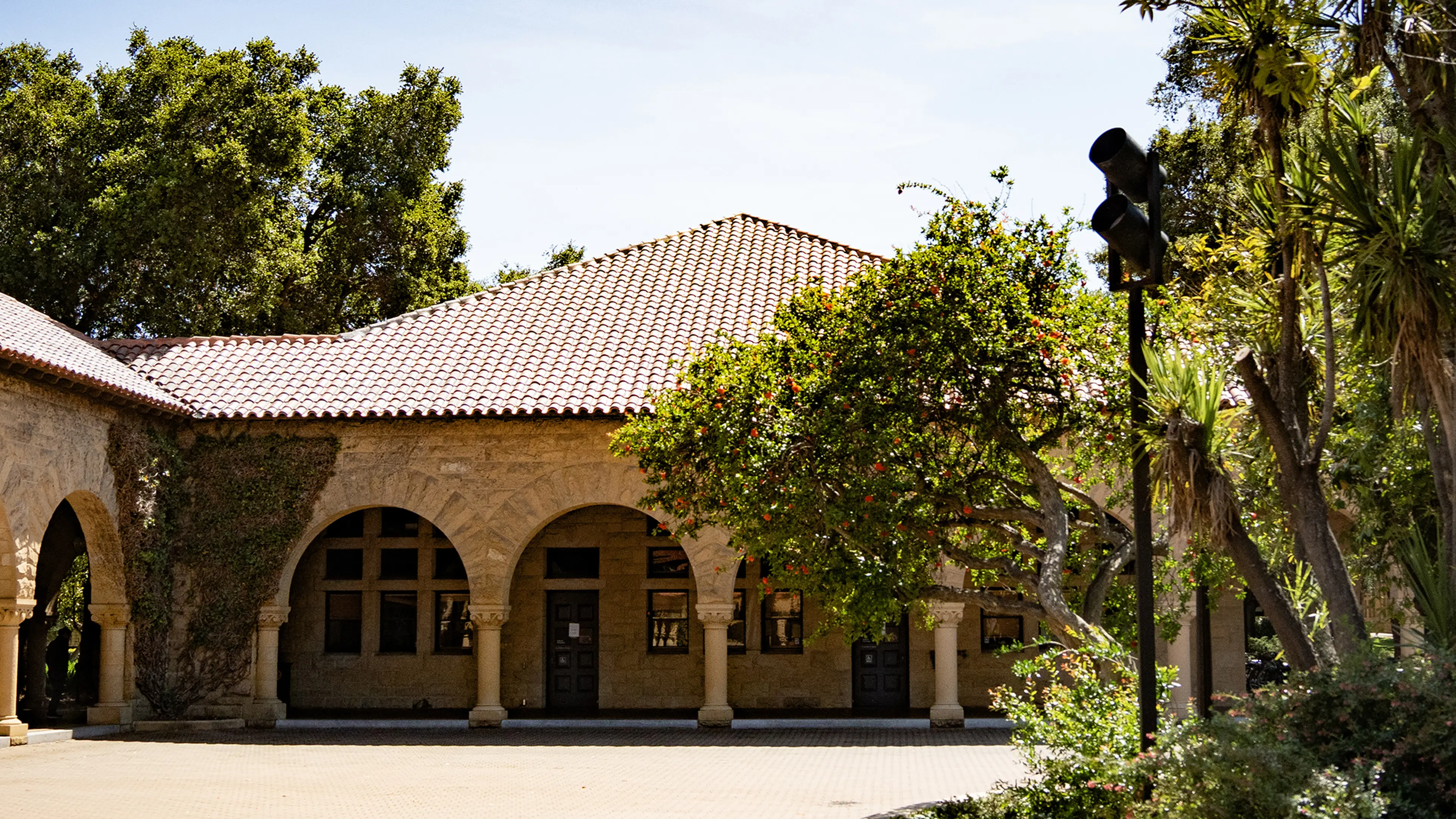
Main Quad, Building 50
450 Jane Stanford Way
Stanford, CA 94305-2034
opens in a new tab
Phone
(650) 723-3421 opens in a new tab
Inquiries
anthropology@stanford.edu opens in a new tab

Directories

  • Our Faculty and Affiliates
  • Our Staff

Key Contacts

  • Sharika Thiranagama
    Director of Graduate Studies
  • Paulla Ebron
    Director of Undergraduate Studies