Graduate Programs
Explore the programs offered by this organization.
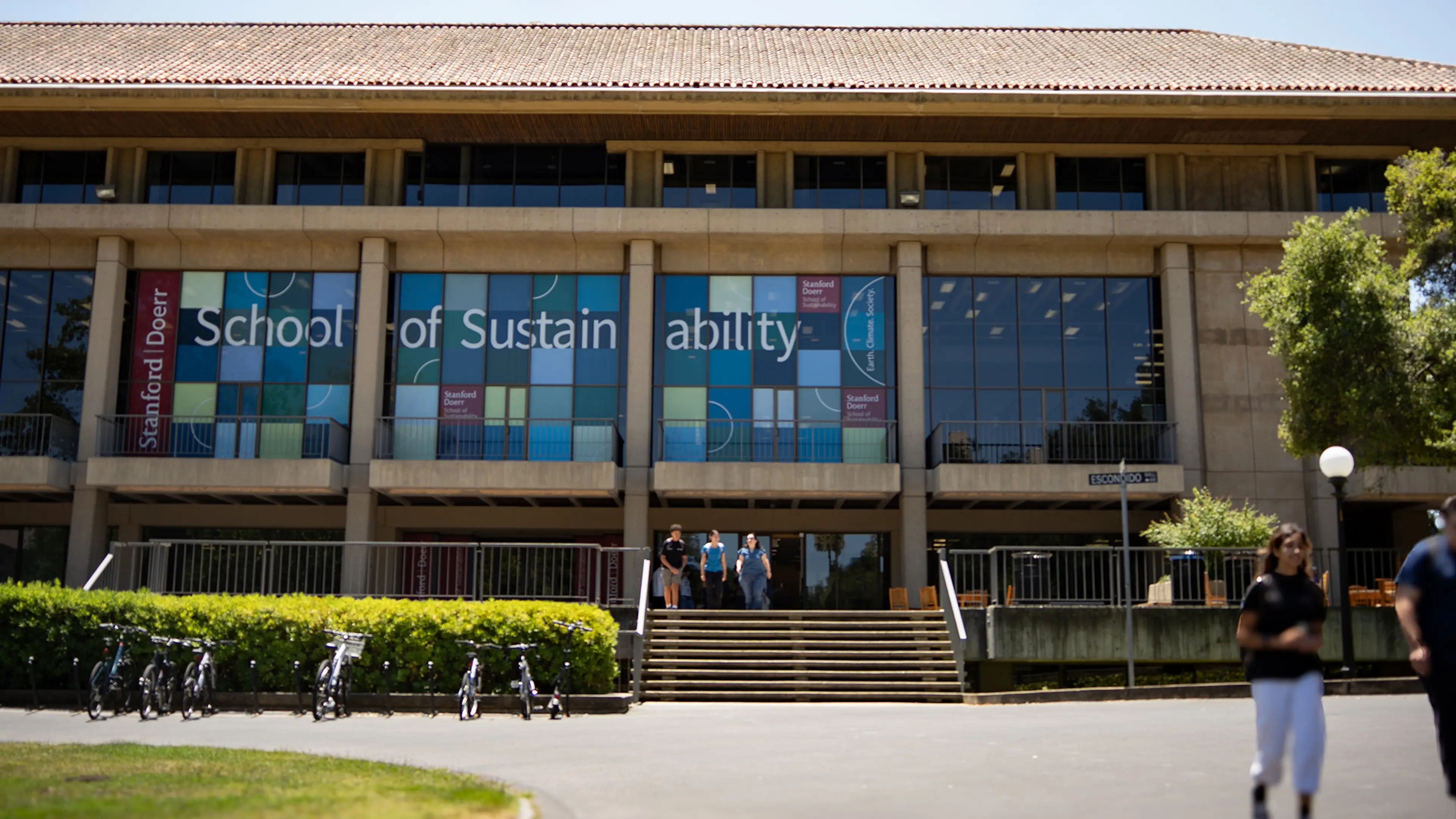
The Oceans Department advances understanding of the ocean, educates future scientists and leaders, and develops solutions for a healthy ocean whose benefits reach everyone. Within the Stanford Doerr School of Sustainability, Oceans brings together biological, physical, and social sciences with engineering and technology into one department.
The department’s work spans from the molecular mechanics of marine organisms to the global policy frameworks governing international waters. By integrating use-inspired research with immersive field experiences, the department addresses the most pressing challenges of our blue planet, including climate change, overfishing, ocean acidification, and habitat loss.
The Oceans Department offers highly rigorous, hands-on academic training designed to prepare students to become leading research scientists, educators, and policy advocates:
Doctor of Philosophy (Ph.D.) in Oceans: A premier, research-intensive doctoral program. Students work closely with faculty advisors and multidisciplinary committees to develop the critical skills needed for scientific leadership. The curriculum emphasizes formulating original scientific questions, designing and executing observational and comparative field studies, modeling marine systems, and publishing high-impact research. Ph.D. candidates also receive extensive training in pedagogy and professional science communication for diverse audiences.
Undergraduate and Master’s Opportunities: The department offers immersive, experiential learning opportunities for undergraduate and master's students. Courses are listed under the subject code [OCEANS] and include unique residential field courses where students live and conduct independent research at the coast.
Oceans faculty, postdocs, and students engage in highly collaborative research across a vast array of disciplines, organized into three broad pillars:
Marine Biology and Molecular Ecology: Investigating organismal physiology, neurobiology, biochemistry, immunology, cell and developmental biology, genetics, genomics, and molecular biology.
Physical and Biogeochemical Oceanography: Studying global ocean currents, marine chemistry, fluid mechanics, coastal and environmental engineering, and the feedbacks between marine ecosystems and Earth's climate.
Human-Ocean Systems and Marine Policy: Exploring marine anthropology, maritime studies, marine conservation policy, and social-ecological systems to design equitable solutions for coastal communities and global fisheries.
The department’s operations are uniquely split between Stanford's main campus and its historic coastal research station, providing students with unparalleled access to both a world-class research university and a living marine laboratory:
Hopkins Marine Station opens in a new tab (HMS): Located 90 miles from the main campus in Pacific Grove on the Monterey Bay, HMS was founded in 1892 as the first marine laboratory on the Pacific Coast of North America. Spanning an ecologically and geologically diverse marine refuge, HMS provides an extraordinary natural laboratory for year-round research, undergraduate field courses, and public engagement.
Main Campus Hubs: Department offices and laboratory spaces are integrated within the Jerry Yang and Akiko Yamazaki Environment and Energy (Y2E2) building, fostering deep collaborations with engineering, economics, and policy departments.