Undergraduate Programs
Explore the programs offered by this organization.
The Department of Energy Science and Engineering (ESE) develops the engineering science and technology needed to diversify the global energy supply, optimize energy systems, and accelerate the transition to a low-carbon, sustainable future. As a key department within the Stanford Doerr School of Sustainability, ESE focuses on the production, transformation, storage, and environmental impacts of energy resources. By combining fundamental physical, chemical, and geological sciences with advanced computational modeling, the department prepares leaders to tackle some of the world's most complex technical and environmental challenges.
ESE offers rigorous, interdisciplinary academic pathways opens in a new tab designed to provide students with a strong scientific foundation and the practical engineering skills necessary to lead the global energy sector:
Bachelor of Science (B.S.) in Energy Science and Engineering: Undergraduates build a robust foundation in physics, chemistry, mathematics, and geology, alongside specialized courses in thermodynamics, fluid mechanics, and energy systems. The program strongly encourages and supports hands-on undergraduate research.
Master of Science (M.S.): A graduate program designed to deepen technical expertise in clean energy technologies, carbon management, and energy system optimization, preparing students for careers in industry, government, or further research.
Engineer Degree (ENG): An advanced professional degree beyond the M.S., emphasizing specialized, applied engineering practice and independent study.
Doctor of Philosophy (Ph.D.): A premier, research-intensive doctoral program where candidates conduct original, publication-grade research alongside faculty in cutting-edge energy fields.
Faculty, graduate students, and postdoctoral scholars in ESE collaborate on highly interdisciplinary research to engineer next-generation energy solutions:
Renewable Energy & Systems Optimization: Modeling and optimizing energy systems, matching clean power supply with demand, and studying power production from wind, wave, and solar resources.
Energy Storage: Designing, modeling, analyzing, and controlling advanced battery systems and energy storage technologies critical for grid stability and electric transportation.
Subsurface Science & Carbon Management: Investigating fluid flow in porous media to optimize carbon capture and geological sequestration (CCS), scale up geothermal energy recovery, and manage groundwater systems.
Computational Engineering & Data Science: Leveraging high-performance computing, numerical reservoir simulation, geostatistics, data assimilation, and uncertainty quantification to model complex physical and engineering systems.
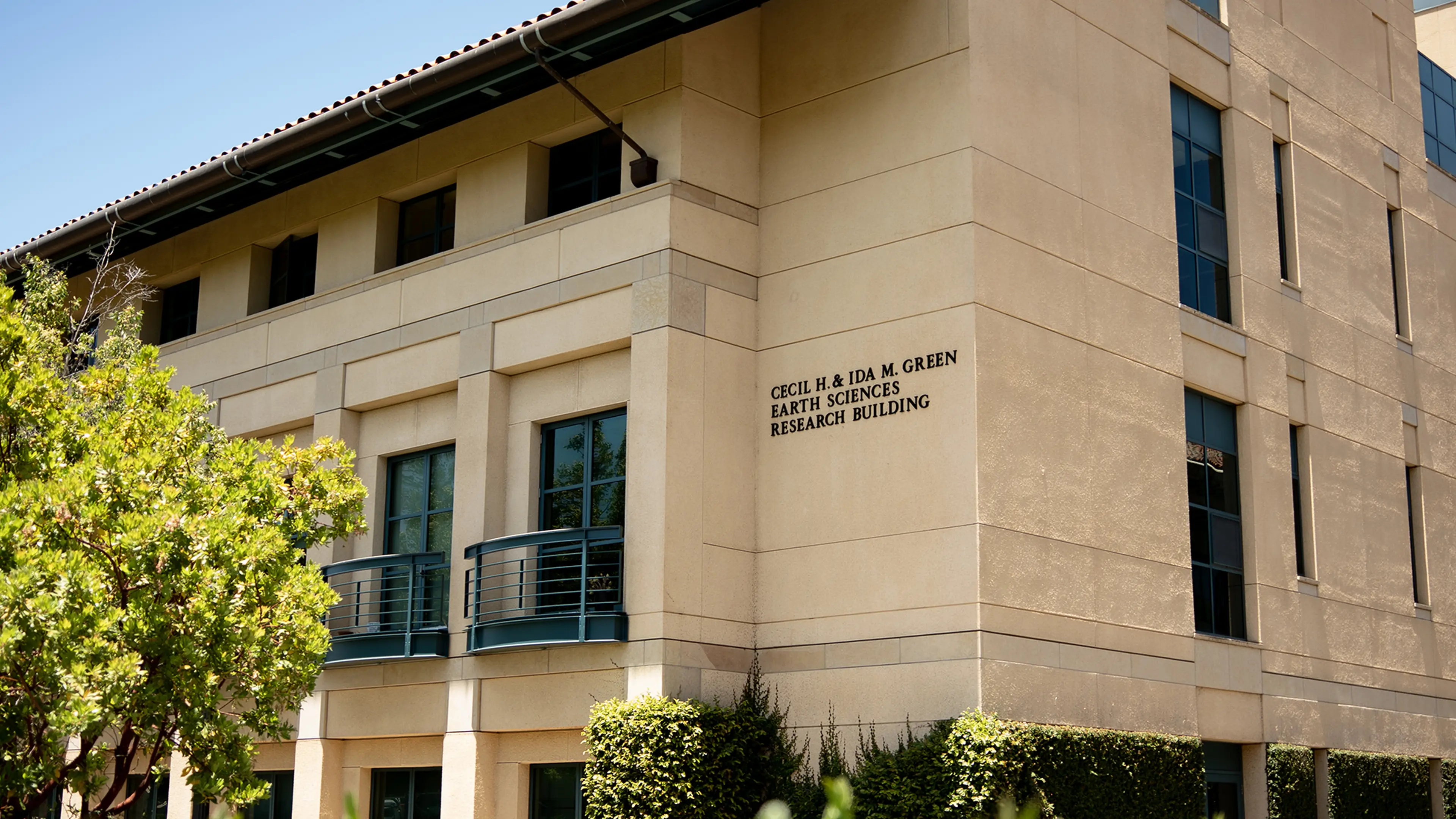
Housed in the Green Earth Sciences Building, the department operates state-of-the-art laboratories designed for experimental testing, numerical analysis, and simulation, including:
Batteries and Energy Storage Laboratory
Multiphase Flow in Porous Media Laboratory
Geological Carbon Storage Operations Laboratory
Geothermal Engineering Laboratory