Bulletin

Interested in attending Stanford?
Visit Undergraduate Admissions opens in a new tab or Graduate Admissions opens in a new tab.

Resources

  • About Stanford
  • About Bulletin
  • Academic Calendar opens in a new tab
  • Bulletin Archive
  • Enrollment Overview opens in a new tab
  • Enrollment Deadlines opens in a new tab
  • Degrees at a Glance

Schools

  • Doerr School of Sustainability opens in a new tab
  • Graduate School of Business opens in a new tab
  • Graduate School of Education opens in a new tab
  • School of Engineering opens in a new tab
  • School of Humanities and Science opens in a new tab
  • School of Law opens in a new tab
  • School of Medicine opens in a new tab
Give Feedback

Stanford University is accredited by the Accrediting Commission of Senior Colleges and Universities of the Western Association of Schools and Colleges opens in a new tab.

Give Feedback
Stanford
University
  • Stanford Home
  • Maps & Directions
  • Search Stanford
  • Emergency Info
  • Terms of Use
  • Privacy
  • Copyright
  • Trademarks
  • Non-Discrimination
  • Accessibility
© Stanford University.  Stanford, California 94305.
Skip to main content
Stanford University
Bulletin
Materials Science and Engineering
School of Engineering
Skip past section menu
Schools, Departments, and Organizations
  • Doerr School of Sustainability
  • Graduate School of Business
  • Graduate School of Education
  • Law School
  • School of Engineering
    • Aeronautics and Astronautics
    • Bioengineering
    • Chemical Engineering
    • Civil and Environmental Engineering
    • Computer Science
    • Electrical Engineering
    • Engineering Dean
    • Hasso Plattner Institute of Design
    • Institute for Computational and Mathematical Engineering
    • Management Science and Engineering
    • Materials Science and Engineering
    • Mechanical Engineering
  • School of Humanities and Sciences
  • School of Medicine
Units and other organizations
  • Athletics, Physical Education, and Recreation
  • Center for Teaching and Learning
  • SLAC National Accelerator Laboratory
  • Vice Provost for Graduate Education
  • Vice Provost for Undergraduate Education
Loading department
Loading programs and courses
Loading department contacts
  1. Home
  2. Schools, Departments, & Units
  3. School Of Engineering
  4. Materials Sci & Engineering

Materials Science and Engineering

About Us

The Department of Materials Science and Engineering at Stanford University is concerned with the structures and properties of nanoscale components. Working at the atomic and molecular levels, our faculty and students design and engineer materials that drive breakthroughs in critical fields such as solar energy production, energy storage, information technology, and medicine. From its roots in metallurgy, the discipline has expanded to encompass polymers, ceramics, glass, composites, and biomaterials, with the ultimate mission of breaking through material limitations to enable technological progress.

Academic Programs and Pathways

Stanford’s curriculum is informed by its focus on the structures and properties of nanoscale components. The department offers several degree pathways to prepare the next generation of materials scientists and engineers:

  • Bachelor of Science (B.S.): Provides comprehensive training in the fundamentals of materials engineering across both soft and hard matter. The curriculum combines basic lecture-based courses, advanced classes, and hands-on instructional laboratories.

  • Coterminal Program: Enables current Stanford undergraduates to work simultaneously toward a bachelor’s (B.S.) and master’s (M.S.) degree in Materials Science and Engineering. Students may apply for admission after earning 120 units toward graduation.

  • Graduate Degrees: Offers advanced study and research training through three graduate-level degree programs: the Master of Science (M.S.), the Doctor of Philosophy (Ph.D.), and the Engineer degree.

Students across all programs benefit from a highly collaborative academic environment, often working alongside researchers in chemical engineering, applied physics, electrical engineering, and medicine.

Diverse Research and Advanced Facilities

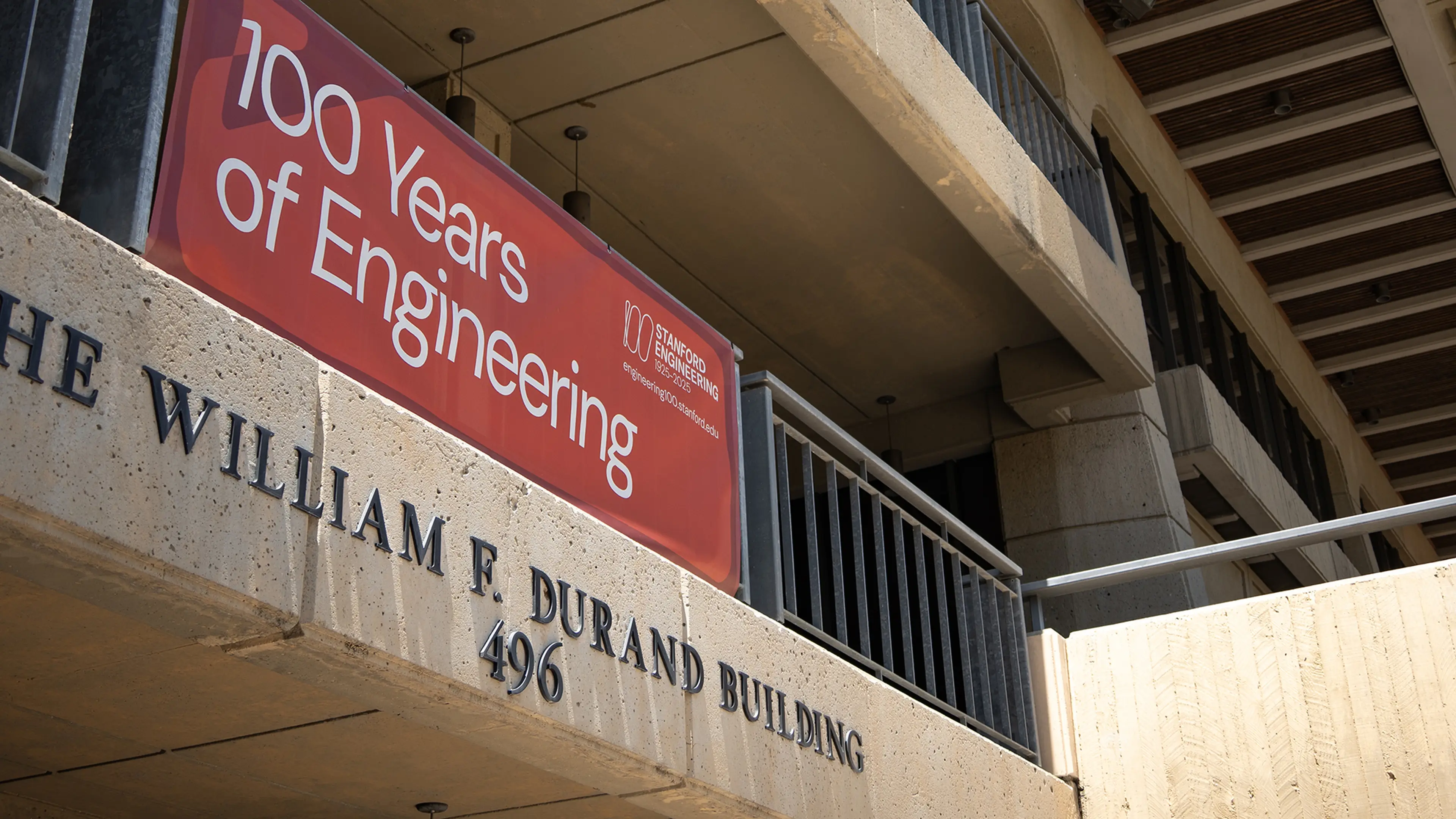
The department supports 15 distinct areas of research, ranging from computational materials science to thin-film deposition and organic polymer materials. Much of this work takes place in the William F. Durand Building, the Jack A. McCullough Building, and the Gordon and Betty Moore Materials Research Building.

Students and faculty leverage a world-class network of shared and specialized facilities, including:

  • The McCullough/Moore Complex: Home to the Center for Magnetic Nanotechnology (CMN), the Stanford Nanocharacterization Laboratory (SNL), and the Nanoscale Prototyping Laboratory (NPL).

  • Shared Research Laboratories: Researchers frequently collaborate and conduct investigations in the Stanford Nanofabrication Facility (SNF), the Geballe Laboratory for Advanced Materials (GLAM), and the Stanford Synchrotron Radiation Laboratory (SSRL).

Our Offerings

  • Undergraduate Programs

    Explore the programs offered by this organization.
  • Graduate Programs

    Explore the programs offered by this organization.
  • Courses

    Explore the courses offered by this organization.

Find Us on Campus

Materials Science and Engineering opens in a new tab
We welcome your inquiries and look forward to connecting with you. Reach out to us through any of the channels below.
Address
William F. Durand Building
496 Lomita Mall, Suite 102
Stanford, CA 94305
opens in a new tab
Phone
(650) 723-2534 opens in a new tab
Inquiries
matsciengr@stanford.edu opens in a new tab

Directories

  • All Faculty and Affiliates
  • Lecturers
  • Staff and Administration

Key Contacts

  • Guosong Hong
    Director of Undergraduate Studies
  • Eric Appel
    Director of Graduate Studies